

Digging Wells in an Age of Dark Nights
We’re not just losing our sense of self, we’re losing our sense of each other, and even possibility. Our senses have gone dark, and our collective souls with them. What can we do?

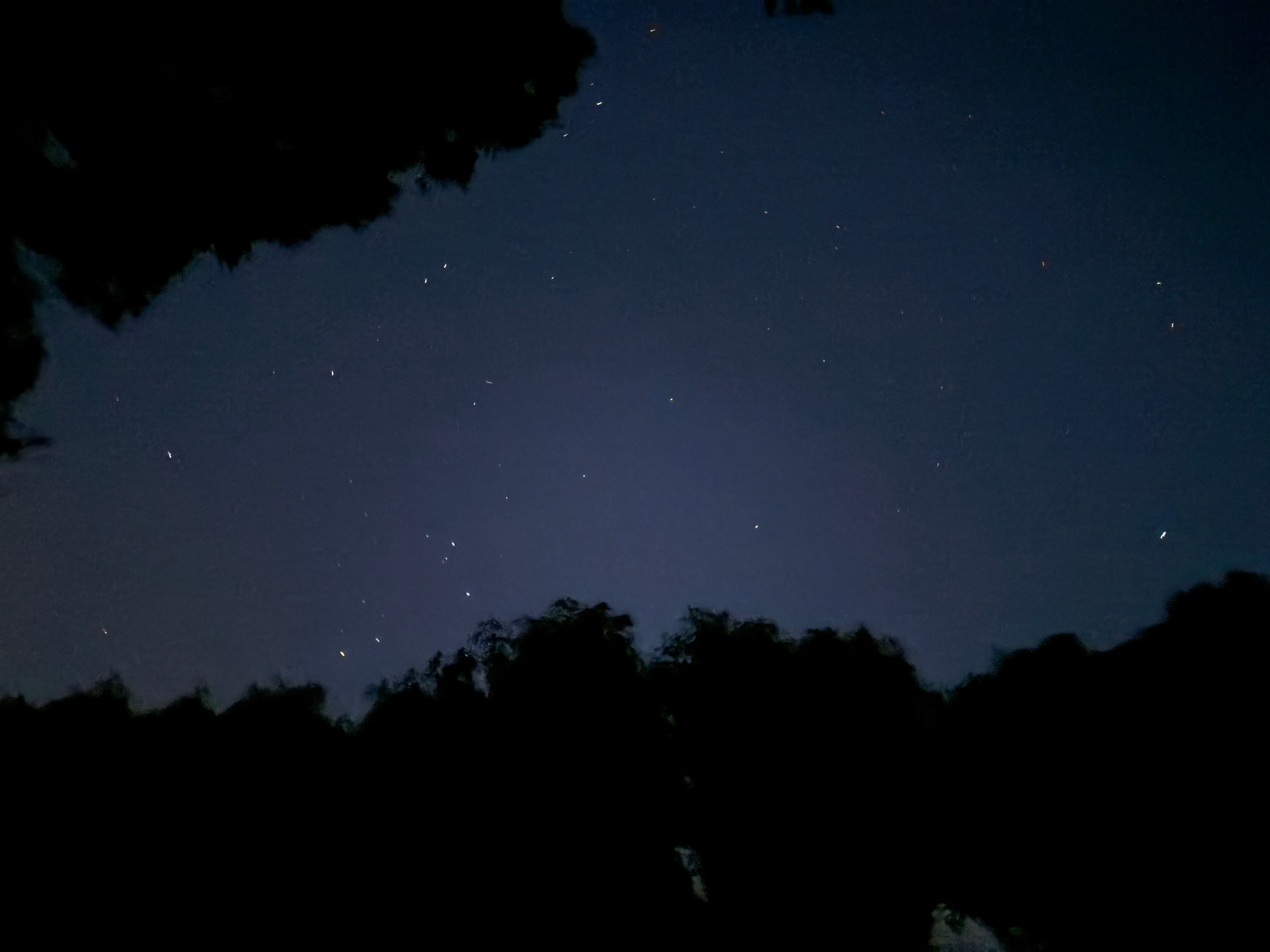
On a dark night,
Inflamed by love-longing—
O exquisite risk!— [to be]…
Concealed by the darkness.
My house, at last, grown still.
That sweet night: a secret.
Nobody saw me;
I did not see a thing.
No other light, no other guide
Than the one burning in my heart. …
all my senses were suspended.
I lost myself. Forgot myself.
I lay my face against the Beloved’s face.
Everything fell away and I left myself behind,
Abandoning my cares
Among the lilies, forgotten.
“Spiritual Canticle,” St. John of the Cross (Trans. Mirabai Starr)
“Work. Keep digging your well.
Don’t think about getting off from work.
Water is there somewhere.”
—Rumi (trans Coleman Barks)
Are you feeling tired, over whelmed, short fused, confused?
You’re in good company. These are Dark Nights.
Now, lets chat about the wells we’re digging.
I’m just back from a weekend event with a community near Washington, DC. I was invited to share the intersections of Christian Contemplation with building Trauma Informed belonging. Countless conversations and over 10 hours of teaching and facilitation…. A real workout for this heart of mine. ‘Grateful.
In a group of LGBTQ people and allies, I was spellbound listening to grandmothers from more traditional religious backgrounds share the liberatory gifts of their grandchildren coming out to them as lesbian, or trans. The inner work of disorientation and letting go of old orientations— coming upon a new depth of loving-kindness and intimacy with God inspired by the courage of their queer kids and grandkids. Witnessing courage requires letting old categories die. I also witnessed career federal workers (engineers, retired generals, special agents, transportation planners) describe their disorientations—some taking early retirement others choosing the tenuous day-to-day of wondering whether their job or projects would remain. In another group we grieved the disorienting collapse of funding for nonprofit work in bringing dissenting, opposing voices together due to new disparaging attitudes toward equity. “When we need cultural humility the most, we’re most separated into self-righteous camps” shared one person.
We’re not just losing our sense of self, we’re losing our sense of each other, and even possibility. Our senses have gone dark, and our collective souls with them. What can we do?
Dark Night of the Soul
The Dark Night of the Soul is a commentary written in the 1580s by Juan de Yepes y Álvarez, whom we know as John of the Cross—the name he took when he entered the Carmelite monastic order. At the time, the Carmelites were torn between two factions. In this conflict, John was seized by fellow friars (from the opposing faction), confined to a tiny cell in Toledo, Spain, and subjected to harsh treatment—beaten, half-starved, and kept in isolation for almost nine months. During this imprisonment he composed, entirely in his head, a poem we now call Spiritual Canticle. After his escape, he wrote commentaries on the poem, including The Dark Night of the Soul, which unfolds in two parts: Book One, on the “dark night of the senses,” and Book Two, on the “dark night of the spirit.”
St. John of the Cross saw how, in the contemplative life, we reach moments when the ecstatic experiences wear off, and the old meditation habits, religious practices, and accomplishments no longer bring meaning. We can’t feel our way through it— “all senses suspended.” No ecstasy, no sense of accomplishment. And to John, for those who continue to practice, things unravel even further into a moment when we are so disoriented we fall into a sort of atheism or agnosticism, the loss of one’s soul, a death of the “I” and the “God” that I thought I was relating with. He writes, “Everything fell away and I left myself behind.” For those who keep digging, there arises a recovery of original blessing—an experiential rebirth in which union with God is no longer bargained for, and suffering, loss, and death are held within that union as fully as any ecstasy or generativity.
Mirabai Starr paraphrases the Spanish mystic’s words:
“The dark night, which we name ‘contemplation,’ creates two kinds of darkness… the soul is stripped of senses… the spirit itself is purged and made naked in readiness for the soul’s union of love with God… To the senses, the first night is bitter and devastating… the second night… horrendous and terrifying to the spirit…. Left in such aridity… they find no satisfaction in their reliable old spiritual practices… God weans them from dependency on the breast so that they can become strong… Everything seems backwards!”
— Dark Night of the Soul, St. John of the Cross, trans. Mirabai Starr (pp. 58–60)
When the Soul Goes Dark Inside
Now, I am no saint.
And yet I’ve experienced parts of these two dark nights, and you probably have too. I’ve lost touch with traditions. I’ve been so exasperated at my shadow self that I felt nihilistically stuck in a loop. I’ve felt this a few times, one in the season that led to leaving Atlanta after 12 years, because life’s plans had collapsed. Thanks to the accompaniment of many professional caregivers and dear friends, the dark night brought me face to face with the unavoidable fact that life is, actually, unsafe, and God’s protection, not guaranteed.
Jim Finley writes it this way
“God protects us from nothing, but unexplainably sustains us in all things.”
I don’t claim this as a truth to argue or defend—only as a way of naming what I came upon in that season and since. Milky platitudes, the hit of first-crush-spirituality, or realized goals can’t stand up to the moment of the dark night.
Unsustainable Shallows
UK Flamenco guitarist and mystic, Nick Mulvey, puts it beautifully in the chorus of his new song, “Supernatural Healing” (you can listen on the YouTube video above.)
”Oh, you’ll never find the water when you’re digging in so many shallow wells.
I never found the water when I was digging in so many shallow wells”—Nick Mulvey
Perhaps, like me, you’ve been in communities that shame people’s reactive behavior, or demean someone with the term “shallow.” What is so winsome about this song for me is that is it not judgemental, it is compassionately confessional. When I’m surviving by skipping over the surface, bypassing, or numbing, I just start feeling so thirsty!
“Supernatural healing, fortify my mind. Give me a path Lord, Lord give me a path.
’Cause are we busy searching in order not to find? Do we keep going never to arrive?
As I got on the plane from DC back to Cincinnati I listened to this song and thought of the many conversations over the last 3 days, and the walls so many of us hit when we panic about the darkening senses, or the darkening nights. How we prefer to stay in the shallows that promise safety, or depend upon a shallow version of a God who is separate from and outside of pain and loss. How some of us shirk in the face of trauma responses, and others dive mindlessly into fixing others. Our “personal programs for happiness,” as Fr. Thomas Keating calls them, are a tyrannical inner court of survival-oriented parts that bargain for safety, power, and esteem. And whether its yoga, mindfulness, or church, our personal-programs-for-happiness are going to prefer the shallows to the dark nights— thinking it’ll spare our senses and souls.
There is No Getting Out Alive
We can bypass, clinging to old orientation or, at last, we can grieve losing something precious and await new orientation. The old mystics would say “You have to die before you die, to live like you’ve never lived.”
There is no getting out of this alive. It is horrifying and disorienting!! Death is a part of life. The very ego that might try to help us through, won’t even be at the graduation when we finally get free.
And yet mystics like these whisper to me that the integration of the diminishments of safety, power, and esteem can help us descend into a deeper belonging, loving, and capacity to collaborate for action. Resistance without grief is unsustainable.
Our Collective Soul has Gone Dark
Now, some might think that dark night is a simply a psychological part of growing up, and there is no real loss. But it is real loss. When your career sector is torpedoed, when your child dies, when someone takes from you unjustly or crosses a boundary, you are never the same. “The old future is gone,” to quote songwriter John Gorka. Something that once was clear is never clear again. In the Christian tradition this is the persistence that after the violence of crucifixion, the risen Christ only returns with the fatal wounds in his side and hands. Healing doesn’t erase what was done, should we come upon it, healing simply frees you from what “what was done” did to you.
As civil rights mentor Howard Thurman writes:
“This does not mean I shall not be hurt by evil, shall not be frustrated with evil, that I shall say that evil is not evil. No... I shall see the travail of my own life with evil, and be not afraid… for thou art with me…1
Individual dark nights reveal all we’ve been bypassing—the wound and the well.
The dark nights of collective society disorient and reveal collective wounds in much the same way. Scourges of human violence—from Kublai Khan to the Ottomans, from the Middle Passage to the Trail of Tears to the Vietnam War—have forever altered the cultural trajectories of countless communities. Real futures of fellow humans were cut short—by fellow humans. This “being” is fragile, precious work. The art, poetry, and communal life of our Jewish siblings, for instance, are indelibly marked by the Holocaust, as they were by their earlier ancestors reaching back through Jeremiah and Esther to the primordial memories of Noah.
Our western myths of progress, our technocratic myths of optimization, the billion-dollar wellness industry, the prosperity gospel—all keep you and I busy digging in shallow wells for a certain future. Neither nationalism, nor Babel, nor Babylon can protect us from the fragile human condition. Card-carrying memberships are no protection in the apocalypse. It is up to us to drop the reactivity earn a new way, together. The systems are in place to keep us from deeper wells. Instagram does this to you and me, student loans do this to us, even political jockeying does this— conditioning actions that hijack our nervous systems are driving us away from deeper wells.
We humans are suffering separately all at once. And so our individual nervous systems go on high alert, clinging, resisting, compounding into even more suffering for others. Unaware of the costly fragility of commitments, we negotiate a “shared program for happiness” that depends on temporary agreements about security, power, and esteem. The future of our agreements are not “safe” or “fail proof.”
Notice where your attention goes (how is your body constricting, mind wandering, etc) as I list a few examples of failures of old agreements: We feel it in job destabilization—coal miners, fishing workers, global health workers, and other sectors fading as AI efficiencies encroach. We feel it in digital overwhelm, in the constant notifications and algorithmic outrage. We feel it in climate anxiety—wildfires, floods, heat that forces us to flee. In medical fragility—diagnoses and denied care. In family ruptures, educational erosion, and identity-based violence.
Dropping the Live Wire
When disorientation floods our nervous systems, it magnetizes us into groups fueled by “never again” vows or raw rage. With the disintegration of co-regulation we fall into, what
calls, “enthrallment”—the relinquishment of our attention and agency to something that promises to save us from overwhelm. This new singular attractor, toward which all our magnets begin to orient—whether for or against—also pulls us away from our inner core and from our shared commitments. It makes us easy pickins for quick answers that reinforce the rigid categories of “us versus them.”Bourgeault describes it as clutching a downed power line: “we must drop the live wire.” Yet instead of letting go, the inner tyranny is amplified by cultural tyrants, leaving us bereft of the real spiritual connections available in the deep wells of our experience—if only we could stop digging in the shallow ones.
The “we” we thought we were, and the “sacred institutions” we thought would save us have gone dark.
I don’t know who God—or the sacred—is for you. Neither do I know what collective interdependent community will look like for you.
But I simply want to acknowledge the dark:
I grieve with you, what we are losing is real.
I grieve with you, our “old futures” are now long gone.
I grieve with you, our senses and our souls have gone dark—
for now.
We can react to this disorientation with ego-strength and try to go back to old orientations (entrenchments, exceptionalism, presumptions of innocence), but there is nothing back there that will be useful for departing. Those wells don’t yield water.
We can react to this disorientation by numbing and binging on satire, complaint, and scape-goating (I’ve certainly indulged in my fair share). But those wells don’t yield water either.
Find the well that does.
Resistance and repair require good hydration.
The Sufi mystic, Rumi, says it gently, “Work. Keep digging your well. Don’t think about getting off from work. Water is there somewhere.”
It may not feel like it is working—still, stay with your practice.
They may not feel perfect—still, build and repair communities of practice.
It might feel easier to complain or to numb—still, practice loosening your grip on the live wire.
It might be dangerous to keep speaking the truth—to go long, go together.
You may be exhausted—then rest. Ask for help. Offer rest to others.
It may not be clear what’s next, but we cannot go back, and we cannot remain here.
Beneath each of us, the deep well is still pumping.
Stay with it, even as things go dark.
We will depart together.
Howard Thurman, Deep Is the Hunger: Meditations for Apostles of Sensitiveness (New York: Harper and Brothers, 1951) — the meditation “Quietness and Confidence.”
As I have recently gone through a significant period of self-analyzed Surrendering to Self and Silence, I've kept digging, resting, balancing... With the advent of the upcoming Internal Authority 6-week course at the Hive, I'm reenergized, pacified to merge meditative journaling and compassion.
Learning about Holy Ideas, Internal Family Structures, and redoing my RHETI Enneagram have provided luminescence through the dark night.